
Using power equipment in winter

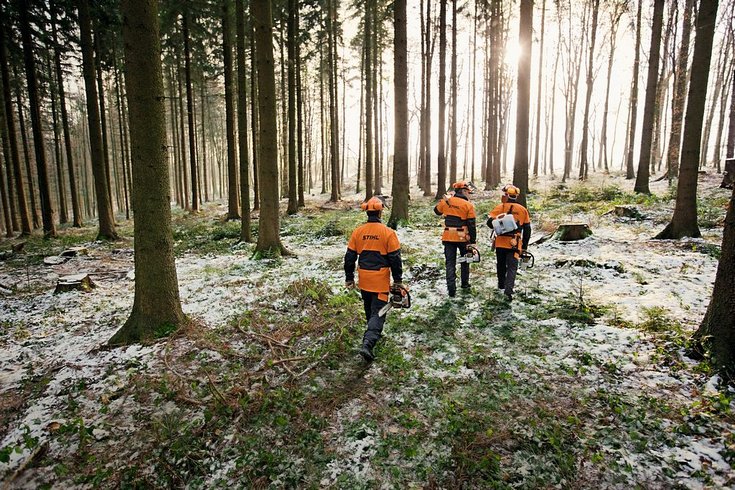
Petrol-engined machines have their own tips and tricks for winter use, to help avoid carburettor freezing and operating faults. First make sure your machine is ready for winter use! The operating manual for the specific machine always helps with this.
Winter conditions do not always mean snow and sub-zero temperatures. Carburettor freezing can occur as early as +10 ‘C. From that temperature (and below), the carburettor should be pre-heated by opening the warm-air duct. To do this, check your machine's operating manual for where and how to do it (chapter “Winter operation”). You should definitely not use warm-air carburettor pre-heating at +20 ‘C and higher temperatures. The air and fuel mixture entering the engine cools the engine internally; too high an intake temperature can cause overheating of the piston and crankshaft assembly parts and may end in costly repairs. The warm-air duct shutter comes as standard with the machine.
For the STIHL MS 261, open the shutter as follows:
1. Remove the cover over the air filter and engine
2. Find the small orange shutter with the sun/snowflake symbol
3. Pull the shutter out of the summer position with the tip of a screwdriver
4. Put the shutter back into its slot with the opening facing the chainsaw.
5. Refit the cover over the air filter and engine. The saw is now switched to winter mode!
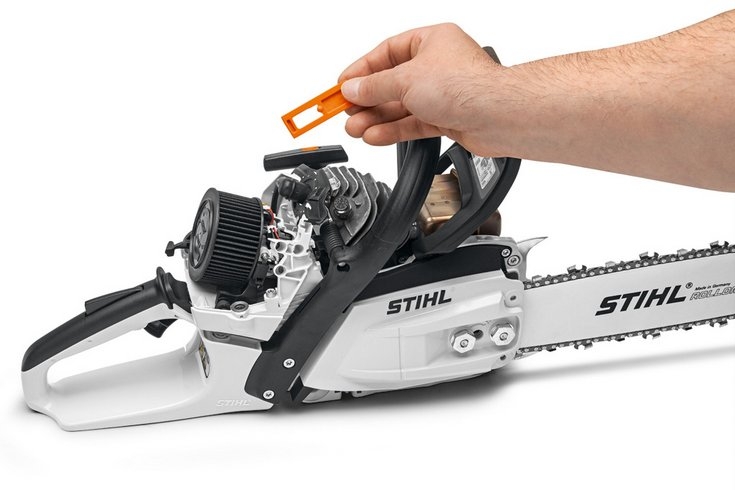
Setting the chainsaw to its winter position
On professional brushcutters, setting the shutter is even easier - the shutter is located right on the cover, marked with a sun/snowflake symbol. Once the shutter is in the correct position for the temperature, there is nothing left but to wish you: power to your work, and enjoy the weather!
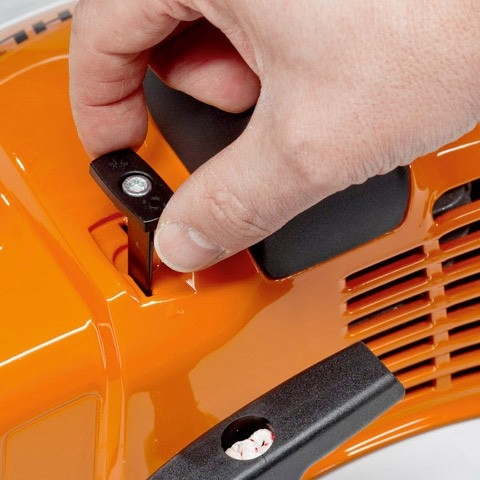
Setting the brushcutter to its winter position
In fluffy snow and at temperatures below -10 ‘C, in addition to the open warm-air duct you should also use a so-called drifting-snow cover. When the cover is used, the warm-air shutter must be in the winter position. The cover is available as a separate spare part; it is not fitted with the machine from the factory. Machines with manual carburettors may also need the carburettor to be adjusted. You can find information on this in the „Winter operation“ chapter of the operating manual.
In addition to the above, on certain models you can use nylon filters, which are less prone to icing, instead of a paper or felt filter. In that case, however, bear in mind that a nylon filter is not suitable for use in conditions with a lot of fine airborne wood dust. In summer conditions you should still use denser-structured filters. Dry a filter that has got wet at room temperature. Frozen and waterlogged paper filters are not fit for further use, as their filtering properties have dropped considerably.
Machines that have electronic handle heating also have carburettor heating, and these machines have fewer faults in winter conditions.
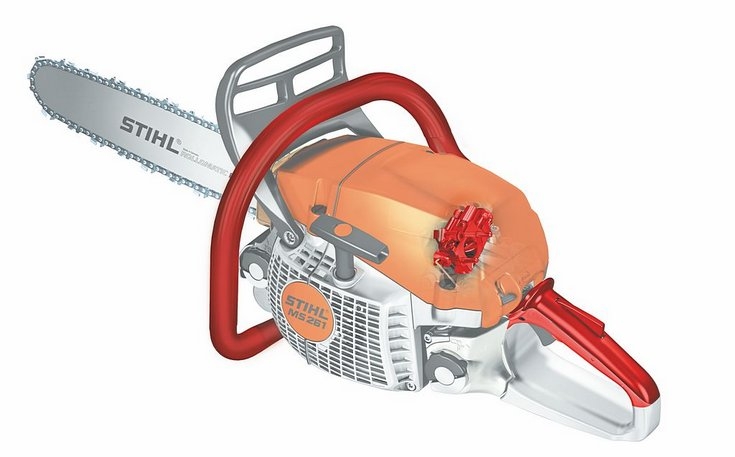
In addition:
Saw chain oil should be swapped for a winter one. To do this, empty the chain-oil tank and use a „thinner“ saw chain oil with a lower crystallisation temperature. Synthetic saw chain oil is definitely better for winter use than mineral saw chain oil; from the STIHL range, SynthPlus saw chain oil is ideal for winter use, with cold resistance down to -25°C
|
|
Base oil |
Lubricating properties |
Special properties |
Shelf life when sealed |
Cold resistance down to |
|
ForestPlus |
Mineral |
Good |
– |
3 years |
-15°C |
|
SynthPlus |
Synthetic and mineral |
Very good |
High-performance saw chain oil |
7 years |
-25°C |
|
BioPlus |
Plant-based oil |
Good |
Environmentally friendly, biodegradable |
4 years |
-20°C |
- As with normal chainsaw use, it always makes sense to keep the saw chain sharp and to keep a few sharp spare chains in reserve. For very frozen wood you may also consider reducing the saw chain's filing angle by about 5 degrees (in everyday terms, making it „blunter“); a chain with a smaller filing angle is less aggressive in brittle frozen wood and does not generate vibration.
- In sub-zero temperatures it also makes sense to use a carbide-tipped saw chain, which stays sharp significantly longer in frozen wood than an ordinary chain
- Finally, it is worth doing everything you can to ensure that the fuel mix contains as little as possible condensation water. To do this, try to keep the fuel mix at a constant temperature at all times. Wherever possible, avoid moving the fuel canister to a warm place during breaks and back out into the cold for work. Constant large temperature swings cause moisture to condense inside the canister. To keep the risk of condensation as low as possible, it also pays to mix the fuel in the smallest possible quantities. Make roughly as much fuel mix as you currently need for the job, and prepare a fresh mix when it runs out.
Your chainsaw needs some extra care in winter
Here are some basic recommendations:
- The chain cover and the surface beneath it should be cleaned more frequently, to prevent snow and moisture freezing together with sawdust and chain oil.
- The chain-brake band and the linkage system should also be cleaned more frequently, to prevent ice from building up there too, which can stop the chain brake from working. This is especially important on saws where the chain-brake system is located inside the chain cover.
- Before removing the fuel or oil tank cap, clean the area around the filler opening, so that snow cannot get into the tank. Water and moisture cause the lubricating properties of fuel and oil to deteriorate.
- Keep the anti-vibration system (the springs and bushings around the engine) free of snow and ice. If the anti-vibration system's elements ice up, the system no longer works properly and causes the operator to tire more quickly.
- Remove snow, ice and water droplets from the rear handle's throttle trigger and throttle lockout area, to prevent them from icing up and to ensure trouble-free operation.
- You must also keep clean the open air intakes on the saw body, which provide the saw's engine with the cooling it needs. Snow, ice and frozen sawdust restrict air flow and can cause the engine to overheat. Also make sure that the thicker clothing worn in winter does not block the air intakes during operation.
- Pay particular attention to the chainsaw's safety systems and keep them clean.
Weather-related hazards
Be careful, as the ground may be icy and slippery. When working, make sure the surface underfoot is firm and provides good grip. In very windy weather and heavy snowfall, consider postponing sawing to avoid accidents.
Make sure there is no ice on the chainsaw handles, which can cause the saw to slip out of your hands during work. Before felling, remove excess snow and ice from the tree trunk and its surroundings. Also remove snow from the lower branches, which can fall down due to vibration during sawing and divert your attention from the cutting.
Sources used: http://www.farron.ee/blog/mootorsaekasutamine/ and http://www.farron.ee/blog/talvinetoo/