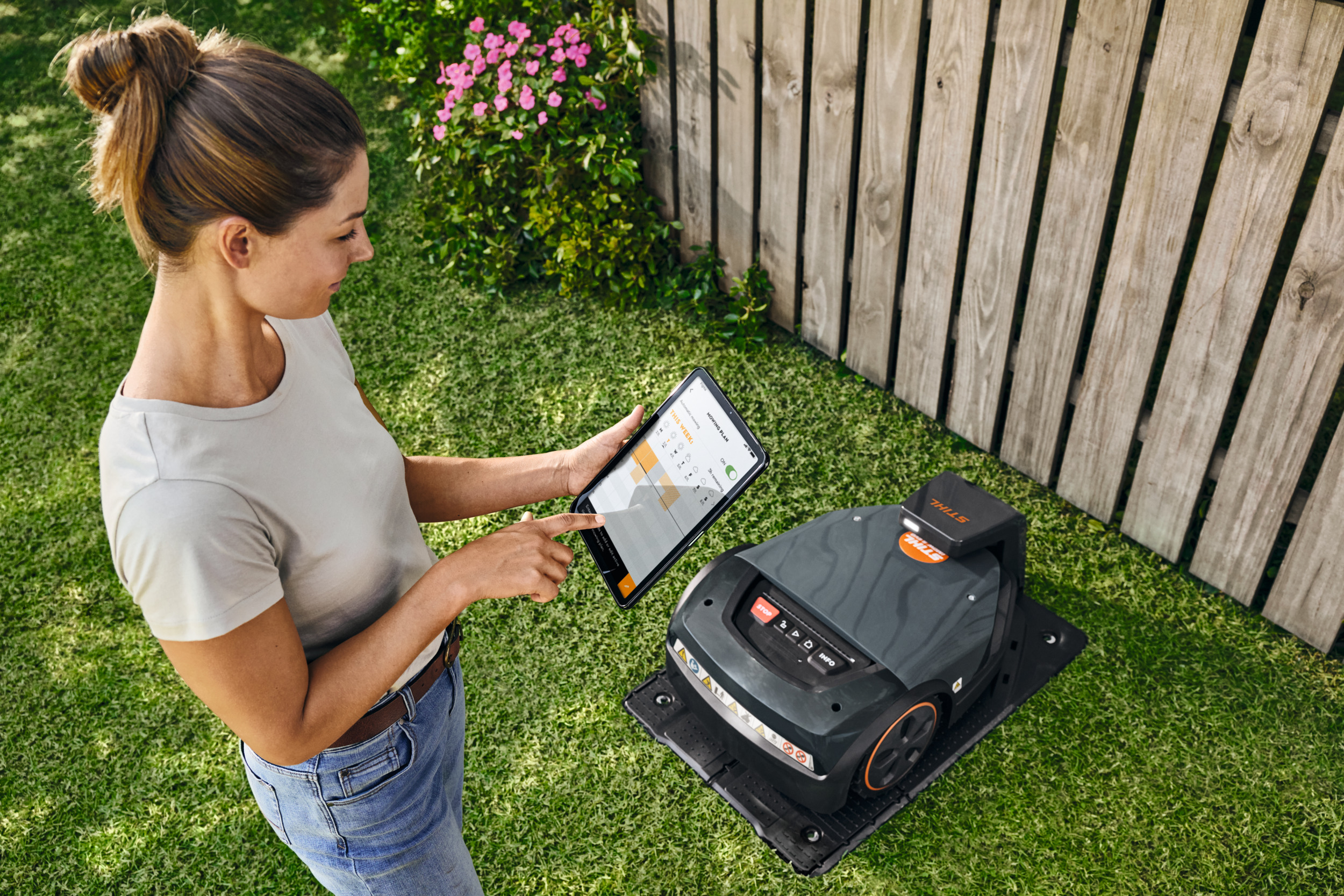
How does a robot mower work?

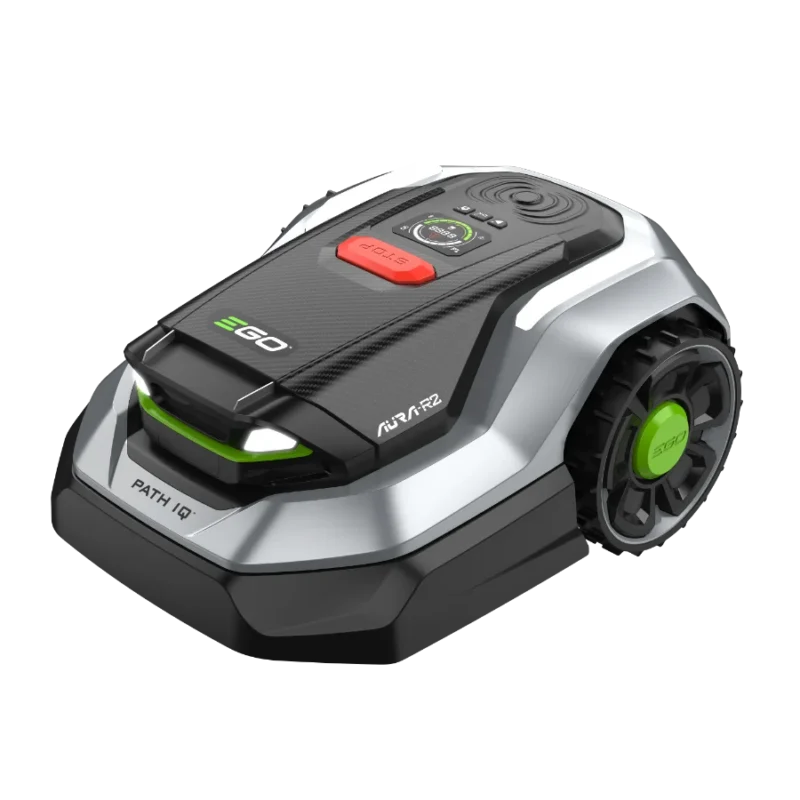
NB! The content of this article is outdated and does not reflect current solutions. Modern robot mowers already work significantly more efficiently, read more:
Read our article on why the EGO Aura is the best wire-free robot mower
All over the media, people talk about how a robot mower saves time and does the work for you. But how much is actually written about HOW a robot mower works? In the following, we try to give an overview of the nature and operation of a robot mower as simply and clearly as possible, starting from A and B.
Misconception: a robot mower mows the lawn on the same principle as mowing with a lawn mower or lawn tractor.
That is certainly not the case. A robot mower is autonomous, i.e. a self-operating machine whose purpose is to mow your lawn. A robot mower does not think for itself and cannot answer your questions – it is not like a computer or artificial intelligence. At best, it can share information about its activity with an app on your phone or with AI-enabled devices. A robot mower is also not like an ordinary mower that you wheel out of the garage once a week and set to mow the lawn. A robot mower is programmed to mow the lawn according to the settings given to it, and the robot mower maintains the garden throughout the whole season. In other words – a robot mower does not let the grass grow tall but keeps it constantly mown. An average robot mower takes about a week to reach everywhere. Before installing a robot mower for the first time, we recommend mowing the lawn to about 3 cm high – this makes it easier for the robot to start and easier for the installer to set up. In addition, the robot starts managing the lawn straight away and no unmown areas are left that would catch the eye.
How does a robot mower know where it needs to mow?
A robot mower does not actually know WHERE exactly it needs to mow. The first step in installing a robot mower is laying the cable – correctly called the perimeter wire – around the area to be mowed. This becomes the robot mower's working field. The cable starts at the robot's charging station, makes a loop around the plot and the obstacles on it, and ends at the charging station. The cable is installed either on the ground with cable pegs or into the ground with a special installation machine that cuts a groove into the turf and lays the cable into it at the same time. When a robot mower is installed for the first time, some robot mowers measure their perimeter length and suggest how much they need to mow per week accordingly; for others, the size of the area to be mowed has to be entered manually and they then suggest their working times. More intelligent models want to do their work on weekdays, so that at the weekend the lawn belongs to the family and they are not in the way. According to the area size, the number of working hours per week the robot needs to keep that area constantly mown is set. These hours can be changed and adjusted to your preferences.
Do all trees and shrubs need to be enclosed?
No, anything strong enough that a nudge from the robot does not harm it can be left unenclosed. One option is also to build an edge around flower beds or trampoline legs, or for example to drive wooden laths around a tree or shrub for the robot to bump against. This way the robot would not damage a young tree or small shrub. In general, we recommend letting the robot bump as much as possible, because if you lay the cable around a shrub, quite a large ring is left to trim. A robot allowed to bump mows closer, so as little as possible is left to weed or trim.
Why does this robot mower move randomly and go to places it has already been? Why does it not mow in sequence, like a robot vacuum cleaner does when cleaning?
There is a very simple answer to this – the floor is hard and leaves no marks when the robot vacuum travels along its path. Grass, on the other hand, does not want to be trodden constantly along one path, and such activity would leave very ugly marks on the lawn surface. So most robot mowers move along a completely random trajectory. This is exactly why the number of working hours per week is needed, during which the robot reaches every last corner of the garden – and if it does not, it can always be directed there. Smarter robots also travel along different paths to the charger, so as not to tread the lawn-edge path. This function can be switched on for the robot under the settings.
It's gone 10 o'clock and the robot isn't mowing, even though it should – what's wrong with it?
The answer – nothing is wrong. You can give the robot mower a time window during which it is allowed to work. This does not mean you should time the robot's working hours and keep a record. The robot is intelligent and knows itself when it can and should go to work – maintaining the lawn is, after all, its job, and it should be allowed to do it without interference, right? But why did it still not go out at 10:00? There can be several reasons for this. First, its battery is not yet charged enough and it wants to finish charging before going to work. Second, it may already have completed its weekly working hours and no longer needs to go mowing. Third, the rain sensor may be switched on, and if it is raining the robot will not go mowing either, unless that is permitted. Fourth, the night may have been so cold that the internal temperature of its battery is so low (below +5 degrees) that it cannot go to work yet and waits for the next work cycle to try again. If the temperature outside is still close to zero, smarter robots know that, to save the battery, work should be started later. For this it is good to have one working time also planned for the second half of the day – this way the robot does not miss a whole working day because of cold weather or rain.
So does the robot not work in the rain?
It does. Smarter robot mowers have rain sensors that recognise whether the weather is dry or wet. Whether the robot mows in the rain or not is for everyone to decide for themselves. You can also set it so that it mows in light drizzle but goes home in heavy rain. If you let it mow in the rain, you will need to clean its blade and the area around it more often. Some models with a phone app also have, for example, a weather forecast built in, so you can decide based on that when to send the robot mowing and, in the event of unexpected heavy rain or a thunderstorm, send it home by remote control. If there are lower spots on the mowing area where water tends to collect, you should either switch off mowing in the rain or drill a hole there with an earth auger, fill it with stones and cover it with soil on top. In that case drainage forms, through which the water drains away, and the robot can work in any weather.
What do I wash it with?
You don't. Definitely not – not with a water hose and certainly not with a pressure washer. Robot mowers are waterproof from the top, but from below water can get to the robot's microcircuit and cause serious trouble there. Grass debris deposited under the robot's base can be cleaned off either dry with a brush or scraper, or at most with a damp cloth. There is also a special protective agent that stops grass sticking firmly to the housing. You should treat the robot's base with it a couple of times over the summer and then cleaning is easier.
Is the robot maintenance-free?
The robot is independent in its work, but it still needs care and an eye kept on it. First, you must ensure that nothing is left lying on the lawn that the robot could damage or that could damage the robot. Second, you should still check whether your friend got home for the night or ran into some obstacles on the way. Robots connected to a phone app can signal by themselves if a problem arises. If you buy a model without GSM, you still need to go and check from time to time. In addition, the robot also needs cleaning now and then – this is usually signalled by increased noise while mowing. Then you need to turn the robot over and see what is going on under its base.
How often do the robot's blades need changing?
Robots vary. Some robot mowers have several thin pivoting blades that need changing several times during the season. Other robots, however, have proper mowing blades underneath and these are changed only once every year or two. Blade changing is usually done during the annual service, so you don't have to think about it yourself. We would not recommend sharpening the robot's blade yourself – the blade must be balanced so that it does not start to shake the robot and thereby damage it. In general, the blades of smarter robots work both ways round – each time you fit the blade it goes a different way round – this way the blade wears more evenly and its service life is extended.
How safe are robot mowers – what happens if the robot collides with a child or pet?
Robot mowers have different safety levels depending on the manufacturer. If there are children or animals in the house, we recommend choosing as safe a robot mower as possible, with the blade hidden and protected as well as possible, so that a foot or paw can in no way come into contact with the blade. Safe models leave a little more unmown than those whose blade is at the edge of the housing, but at least you have peace of mind that there is no risk of injuring anyone. Some robots detect a collision when the wheel starts spinning – these robots bump a bit more and have a more abrupt character. Other robots, however, have a collision sensor on the housing that, with a gentle nudge, already tells the robot that an obstacle is ahead. In that case the robot turns around and continues its work in another direction.
If I buy a robot mower, does that mean I no longer have anything to mow in the garden?
If your garden is not designed so that all the edges are grass-free and covered with stone paving or gravel, you will not escape trimming. Robot mowers leave roughly 15 cm unmown at the edge, and for this it would be good to have a trimmer. Cordless grass trimmers are especially good, because you need neither oil nor petrol and they start at the push of a button.
What do I do with the robot in winter?
For winter the robot goes into hibernation, and so that it can winter comfortably, it should be moved into a warm, dry room before winter arrives. Its charging station should also be removed from outdoors and put away to winter together with the robot, because the robot also needs charging once during the winter. If you do not want to deal with this yourself, you can bring the robot to our shop for the winter. In that case the charging station should simply be covered up outdoors so that snow and water cannot get to it.
But I have such a complicated plot – is a robot suitable for me at all?
In general a robot is suitable for any garden, but to be sure you can always send us an enquiry with your address, with which we can review the plot on the Land Board's website, draw the installation onto it, and on that basis make a specific offer for the robot that best suits your garden. The easiest way to enquire is using the form: https://saemeister.ee/tahan-robotniidukit/ Our installer can be creative even in the most difficult conditions and, if necessary, lifts up the stone paving, runs the cable underneath and puts the stones back neatly.
Saemeister's range includes quality robot mowers from brands such as STIHL and STIGA. Both robots have proper mowing blades and a rain sensor – some are phone-compatible, others manually configurable. Some robots have a removable remote so you can make settings standing upright and, if needed, also go mowing behind the garden with the robot. You can see our robot installer in action in this video:
You can find all STIHL models here: https://saemeister.ee/tootekategooria/robotniidukid-2/imow-robotniidukid/
and STIGA models here: https://saemeister.ee/tootekategooria/robotniidukid-2/stiga-robotniiduk/