Which pressure washer should you choose?

Pressure washers are made in different colours, different sizes, with different equipment and under different brands. To find the best and most suitable pressure washer for yourself, you should first think through what jobs above all you need to do and how often, as well as what accessories you would need to use. At the same time you also have to look at the capability of the machines. With pressure washers there are two things to watch: the working pressure and the water flow. These have to be optimal in relation to each other, because neither on its own achieves much. For example, high pressure is achieved by restricting the water jet through the smallest possible opening, from where the water pressing through creates high pressure. The result is a narrow jet that cleans only a single small spot, and even that poorly, because the water flow is too small to carry the dirt off the surface. At the same time, a large water flow with low working pressure means the surface being washed gets very wet, but there is not enough pressure to break the dirt loose.
There is no specific formula or answer here as to which number is best for what. Roughly speaking, you can use a calculation in which you multiply the maximum working pressure by the maximum water flow and then choose the device with the highest result in your particular price range. But this does not always reflect the machine's real ease of use, because hose lengths, the accessories included, the length of the electric cables and so on also play a role. The structural features of the machine matter too, because the material of the pressure pump (metal or plastic), the power of the motor and other such details play a role in performing different tasks (for example, how long the washer has to run continuously and similar nuances).
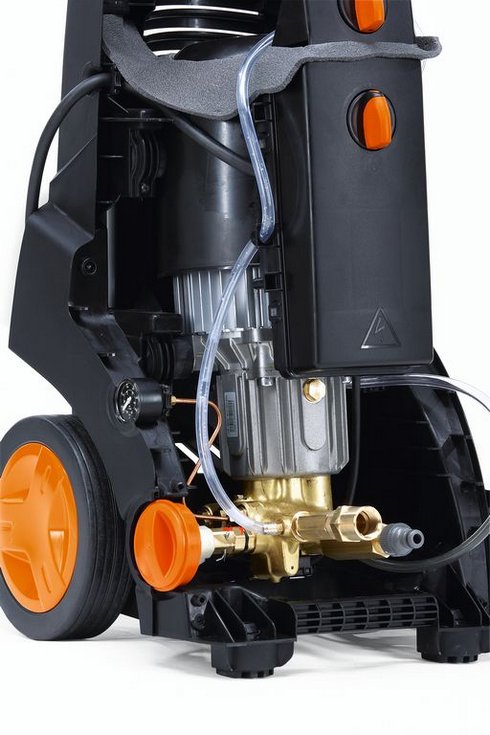
STIHL pressure washer high-pressure pump
All STIHL pressure washers use a metal pressure pump on every model, which is more resistant to wear. All pressure washers also have quick-connect guns and pressure hoses that make using the washer extremely easy; the rotating pressure-hose connection on the gun also prevents the pressure hose from kinking during washing. All washers likewise have two nozzles, a standard nozzle and a rotary nozzle for washing particularly dirty surfaces. On all models there are separate, convenient holders on the machine for the nozzles; on models from RE 109 onwards the nozzles are stored conveniently and safely under a separate cover. On the PLUS models (RE 129 PLUS and 143 PLUS) a high-pressure hose reel is used, and on the RE 143 PLUS model also a 15 m long flat hose for connecting to the mains, to ensure even more convenient use.
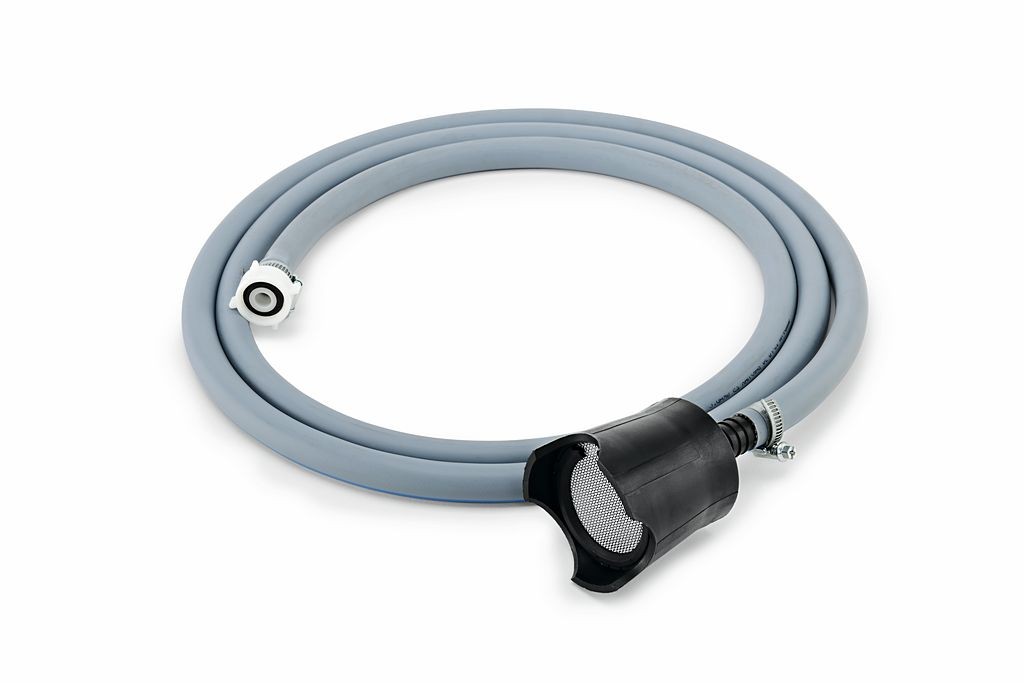
Pressure washer suction kit
All STIHL washers are also able to draw water, so you do not always have to use the mains supply; you only need the suction kit that is available as an optional accessory. On models from RE 109 onwards there is also an aluminium telescopic handle, and from the RE 119 model onwards also a front aluminium carrying handle, which make transport and storage easier. All washers also come either with a (RE88–129PLUS) or with a built-in (RE 143 and 143 PLUS) separate detergent tank for conveniently applying detergent to the surface.
Washers intended for home use are generally divided into three classes:
a small „budget" washer
a mid-range washer
a premium-class washer
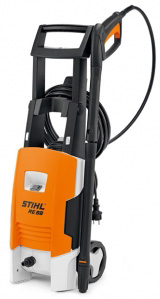
Small washers may well have all the features you need, but you have to bear in mind that their capacity is not so great as to cope with slightly heavier and longer-lasting cleaning jobs. They are therefore ideal for cleaning smaller areas (a short pavement, a small barbecue corner), washing bicycles and smaller cars, and cleaning garden furniture. They are small and light, easy to move and store. However, their pressure hoses are shorter and their ease of use is a little lower. In the STIHL range such models are the RE 88 and RE 98.
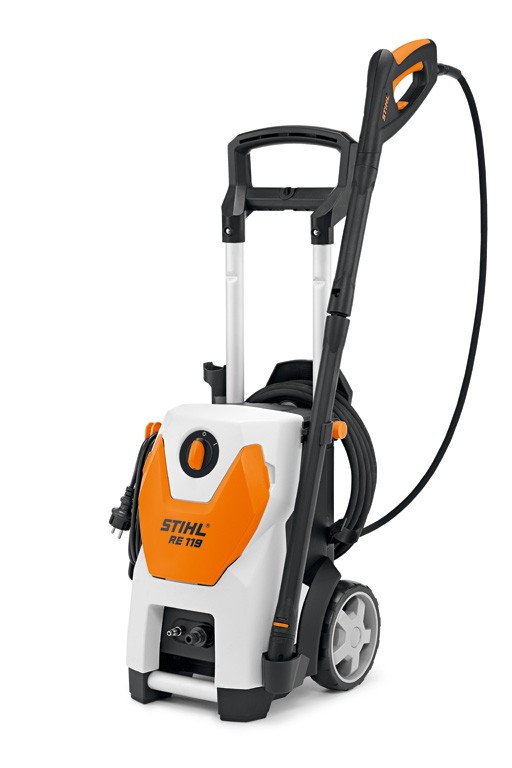
Mid-range washers are already suitable for considerably more cleaning jobs. For example, pavements, terraces, mid-range cars and SUVs, and motorcycles. Thanks to a more capable motor they are able to run continuously for longer. The pressure hoses are also of sufficient length, the choice of accessories is wider, and some use compact pressure-hose reels that make storage and transport even easier. In the STIHL range these washers are the RE 109, RE 119 and RE 129 PLUS.
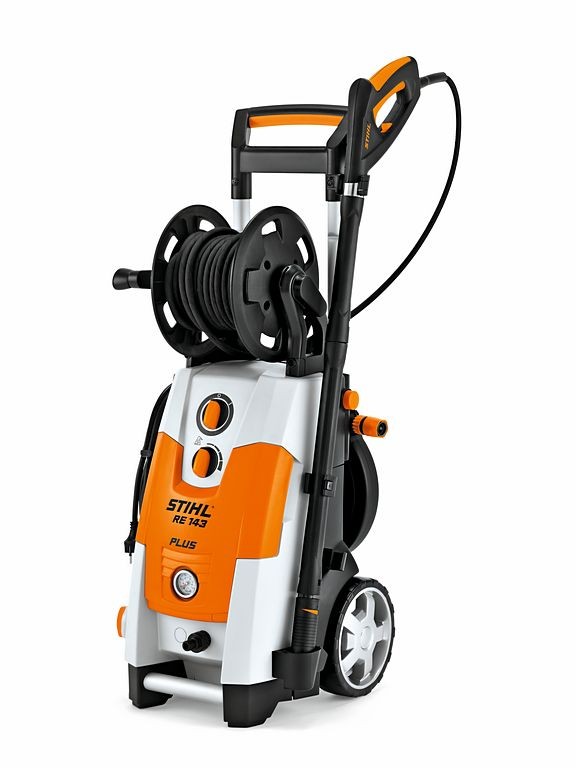
Premium-class washers cope with all the cleaning jobs you need to do at home. Caravans, very dirty vehicles, agricultural machinery, large surfaces, lorries and so on. Their cleaning capability is excellent, they have long high-pressure hoses, many storage points on the machine for various accessories, and plenty of convenience equipment. In the STIHL range the premium-class washers are the RE 143 and RE 143 PLUS.
How to wash cars, motorcycles and other vehicles using a pressure washer?
– As the first step, it is worth simply rinsing a very dirty vehicle clean with pressurised water and washing off the larger dirt and grime. Wash so that the fan of the pressure jet is about 5–8 cm wide. If the pressure angle of the nozzle is not adjustable, simply move the nozzle further from or closer to the surface to achieve the required jet width. Be more careful around weaker surfaces such as glass, lights, plastic surfaces and similar spots. There, use a wider, lower-pressure jet (keep the nozzle further away).
– Apply detergent to the surface using the pressure washer. If the vehicle is not very dirty, you can apply the detergent directly to light dirt; it even works better that way, because there is no protective layer of water between the detergent and the dirt. For a very dirty vehicle, after rinsing off the large dirt you can also let the vehicle dry and then apply the detergent to the already-dry surface. To apply detergent, the pressure washer must be set to low pressure; on devices with a separate detergent tank this is done from the detergent-tank nozzle, and on models with a built-in detergent tank by adjusting the nozzle. NB! Do not let the detergent dry on the surface!
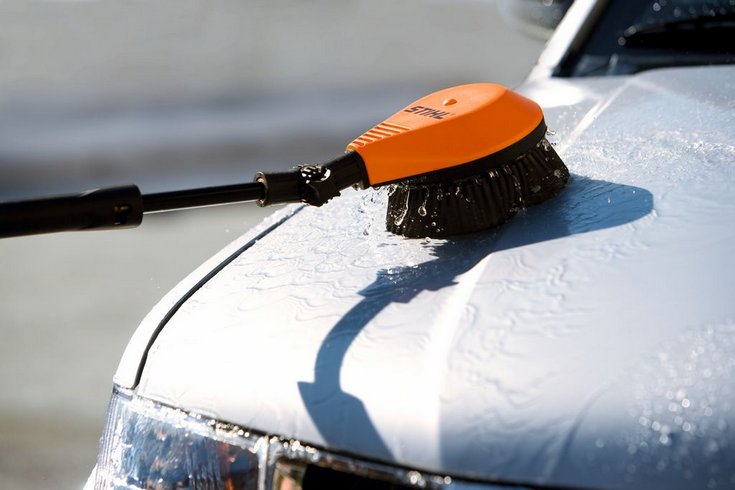
– Wash the dirt off the vehicle. For this you can use just the pressure washer (which works in cooperation with a very good detergent and a washer with good pressure and water flow), a clean washing sponge, or a washing brush that attaches to the pressure washer's gun lance (particularly useful, for example, when washing buses, trailers, caravans and other large surfaces). NB! Wash the wheels, wheel arches, underside and other dirty places last, because otherwise small stones or grains of sand can stick to the washing sponge or brush and damage the vehicle's painted surfaces during washing!
– Rinse the vehicle with the pressure washer. When rinsing, use the pressure jet the same way as for the initial rinsing-off of larger dirt. That is, a lower and wider jet on weaker surfaces. Use various angled washing lances or nozzles to wash hard-to-reach places. This way you can conveniently wash the inner parts of alloy wheels, the corners behind wheel arches, the inner corners of bumpers, the underbody and other hard-to-reach places.
– Do not forget to clean the „hidden" spots too: door edges, door-opening edges, thresholds, under the door handles, behind the mirrors and other places the pressure jet does not reach on its own.
– After rinsing, you can also apply rinse wax to the vehicle, which makes drying easier, as it forms a water-repellent layer on the surface. Drying is important so that no dried water streaks or spots remain on the vehicle's surface. Both an ordinary towel and a special chamois-leather cloth intended for this are suitable for drying.
Be careful!
* Do not use a rotary nozzle for washing cars, because its significantly stronger jet can damage the paint surface
* Be careful when pressing the trigger with the initial jet, as it is a little stronger than the normal working pressure. When first pressing the trigger, point the jet away from the surface to be washed (preferably at the ground).
* Try to wash vehicles on a concrete or similar surface. Gravel and crushed stone can fly up if the jet is accidentally directed at the ground and damage painted surfaces.
* Do not direct a strong jet at places where the paint or lacquer surface is damaged (a piece missing or similar), as this can deepen the damage and remove paint or lacquer from a larger area. That said, the washer is suitable, for example, for removing old loose paint from various surfaces.
* Never use the jet to wash the engine bay, boot or interior (unless of course you want a new car). Before washing, check that the windows are closed too.
* Do not direct the jet for too long straight into the gaps between panels, as these are the most likely places for water to leak in. At the same time, this is a way to check, for example, the leak-tightness of door seals.
What else can you do with a washer besides washing vehicles?
– Aiad
Wash your white fence every spring, or at least every other year. In addition to its aesthetic value, this also ensures the fence's longevity, as the residues and moss that have accumulated on it, which can begin to damage the timber, are removed.
– Timber or brick house façade
As with fences, the walls could be washed at least every other year to preserve their aesthetic value. When washing walls you can also use special detergents that can be applied to the surface using the washer's detergent tank. Let it work for a little while (do not let it dry) and wash the wall with the pressure washer
– Garage doors
– Outdoor barbecue
Barbecue grills get greasy and dirty quite quickly. To meet the new barbecue season comfortably, wash the barbecue clean with the pressure washer in spring. The inner surface of a charcoal grill can be conveniently cleaned using a rotary nozzle.
– Spider webs and wasps' nests
The pressure washer can also conveniently remove spider webs, wasps' nests and similar objects outdoors that do not exactly make being in the garden the most pleasant. When removing wasps' nests it would nevertheless be advisable to use insecticide first, as they may not be very happy if you start working on their nest with a pressure jet.
– Concrete, paved or stone footpaths and driveways
Over the course of a year a surprising amount of grime accumulates on these surfaces. It can be removed quite conveniently using a rotary nozzle. Footpaths look like new after washing.
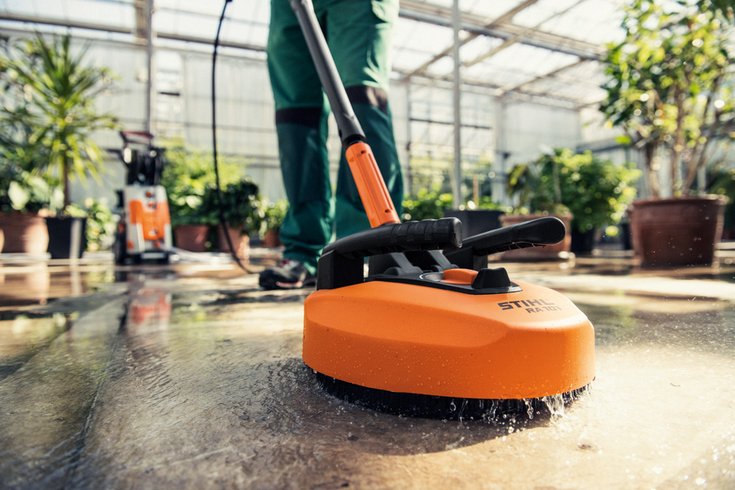
– Terrassid
A spring wash of a wooden terrace gives it a completely new look. Use the special RA101 terrace washing brush, which cleans surfaces even of stubborn dirt without excessive splashing. Its special nozzle system lets the brush glide gently over an uneven surface while floating slightly above it, so you do not have to scrub away with sweat on your brow.
– Garden furniture
Outdoor furniture is built to be waterproof anyway, so you can wash it with a pressure washer quite safely. This is especially true of lighter-coloured plastic furniture, which tends to attract all the dirt found outdoors. Here it is better to use a standard washing nozzle and slightly lower pressure, since high pressure or a rotary nozzle can damage various surfaces.
– Mowing and other garden machinery
Wash the underside of a lawn mower or lawn tractor cutting deck, the blades and housing of a tiller, the trimmer guard and similar equipment with a pressure washer to remove dried-on grass residue, soil and other muck easily and conveniently. NB! Take care not to aim the pressure jet directly at the motor, bearings, shafts or other such assemblies! Wash only the housing!
– Insect nets
Fishing nets, plant-protection nets, basically any nets. Of course, use lower pressure than usual, since high pressure can damage the mesh.
– Porivaibad
Hang the dirt mat up somewhere so the dirt can run off, and wash it thoroughly from the top edge downwards. Do not use a rotary nozzle, which can damage the material.
– Rubbish bin
Summer, heat, slightly rotting rubbish... Not pleasant, is it? After bin-collection day, take your plastic rubbish bin, apply a little detergent inside, wash it all over with a pressure washer and the unpleasant smells will decrease at least tenfold.
– Boat, bicycle, garden cart and so on - anything that is outdoors can also be cleaned with a pressure washer, using certain techniques or accessories.
– You can even make street art!
STIHL tip
– Do not keep the mains supply hose too short; about 7 m is optimal. When using washers with a built-in detergent tank, it can happen that while the washer is standing still and connected to the mains, detergent may leak into the water mains. To prevent this, use either a non-return valve or remove the pressure washer from the mains immediately after finishing work, and use a slightly longer supply hose.
– Check that all supply-hose and pressure-hose connections are leak-free, so that no air is drawn into the system.
– The high-pressure hose must always be fully unrolled during use to prevent kinks forming in the hose
– Before starting the washer, hold down the spray-gun trigger until a steady flow of water comes out. Release the trigger and start the washer. This way the water is already inside the machine and the washer does not have to build up pressure. It also avoids the air bubbles that form at the start of work and make the pressure fluctuate.
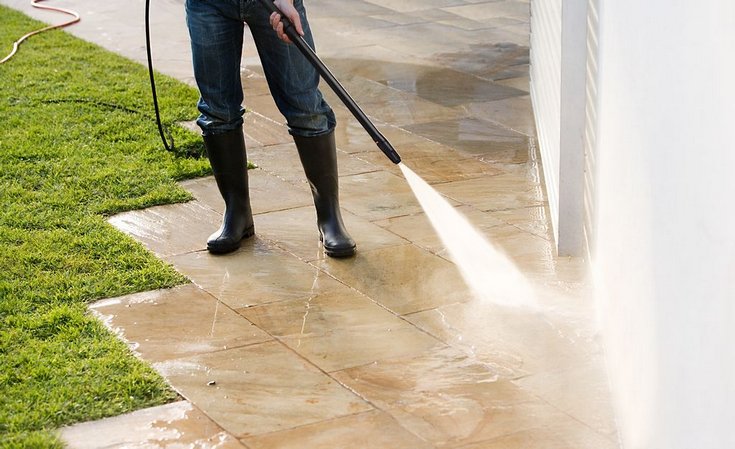
– With the first pull of the trigger, aim the pressure jet away from the surface being washed, because the initial pressure is a little higher than the normal working pressure.
– Hold the spray gun at a 45-degree angle to the surface to increase the working reach of the jet (the dirt is washed off in one direction).
– Wash smaller areas at a time. Always wash surfaces from top to bottom, so that streaks of dried dirt do not appear on the clean surface.
– Always rinse thoroughly!
– Do not leave the machine under pressure after finishing work. Stop the machine, disconnect it from the mains power and water supply, and press the spray-gun trigger to release the pressure from the pump.
– Do not leave the washer in a cold garage over winter, as water expanding when it freezes can destroy the pump.
– Always use protective equipment with the washer as well, at least safety goggles!
Source: https://www.farron.ee/blog/survepesur/